
Learning how to avoid false breakouts starts with one habit: do not trade the first poke through a level. Wait for the market to prove the break with a candle close, supportive volume or a successful retest, in the direction of the bigger trend. Below we explain why fakeouts happen and what each filter costs you.
Quick answer: how do you avoid false breakouts?
Wait for a candle to close beyond the level rather than reacting to a wick, check that participation (volume) expands on the break, prefer breaks that follow the higher-timeframe trend, and consider entering on a retest of the broken level. Each filter removes some fakeouts but gives you a later, slightly worse entry.
Karl’s original video walkthrough on trading breakouts is below. The checklist that follows builds on it.
What a breakout is, and what makes it false
A breakout is price moving through a level the market has respected before: a range high, a range low, a clear swing point or a round number. Trading breakouts means joining that move on the idea that the balance between buyers and sellers has shifted. Short pauses inside a trend, such as flags and pennants, are a common source of breakouts. Triangles are a common source of these breaks; see our guide to triangle chart patterns.
A false breakout, or fakeout, is a move through the level that fails. Price pushes beyond it, fails to find follow-through and returns inside the old range, often quickly. Anyone who bought the break is trapped, and their stops fuel the reversal. Traders also call these bull and bear traps.
If you are still getting comfortable with levels, our guide on how to read price action step by step covers swing points and ranges first.

Why so many breakouts fail
Obvious levels attract orders. Traders who are short above a range high put their stop-loss buy orders just above it, and breakout traders place buy-stop entry orders in the same place. When price reaches that cluster, a burst of buying is triggered all at once. Our guide to market, limit and stop orders explains how buy-stop and sell-stop entries work.
Research by Carol Osler at the Federal Reserve Bank of New York found that stop-loss and take-profit orders in currency markets are strongly clustered at round numbers, and that stop-loss orders tend to intensify moves once a level breaks. Her later paper found trends are unusually rapid when price reaches levels where stop-loss orders cluster, with the effect lasting hours rather than days.
That is the mechanism behind many fakeouts. The burst of triggered orders can push price through the level, but once those orders are filled there may be nobody left to keep buying. Without fresh participation, price drifts back inside the range. You do not need a conspiracy about “stop hunting” to explain it.
How to avoid false breakouts: a five-point checklist
No filter is perfect on its own. Used together, they make you wait for the market to show its hand.
- Close, not wick. Wait for a candle body to close beyond the level on your trading timeframe.
- Participation. Look for volume, or range and momentum, expanding on the break.
- Trend. Prefer breaks in the direction of the higher-timeframe trend.
- Context. Check that there is room to the next level and no major news due.
- Retest. Consider entering when price returns to the broken level and holds.
Close versus wick
A long wick through a level that closes back inside the range is a rejection, not a breakout. Waiting for the close on your timeframe is the single simplest way to filter out the fastest fakeouts.
Volume and participation
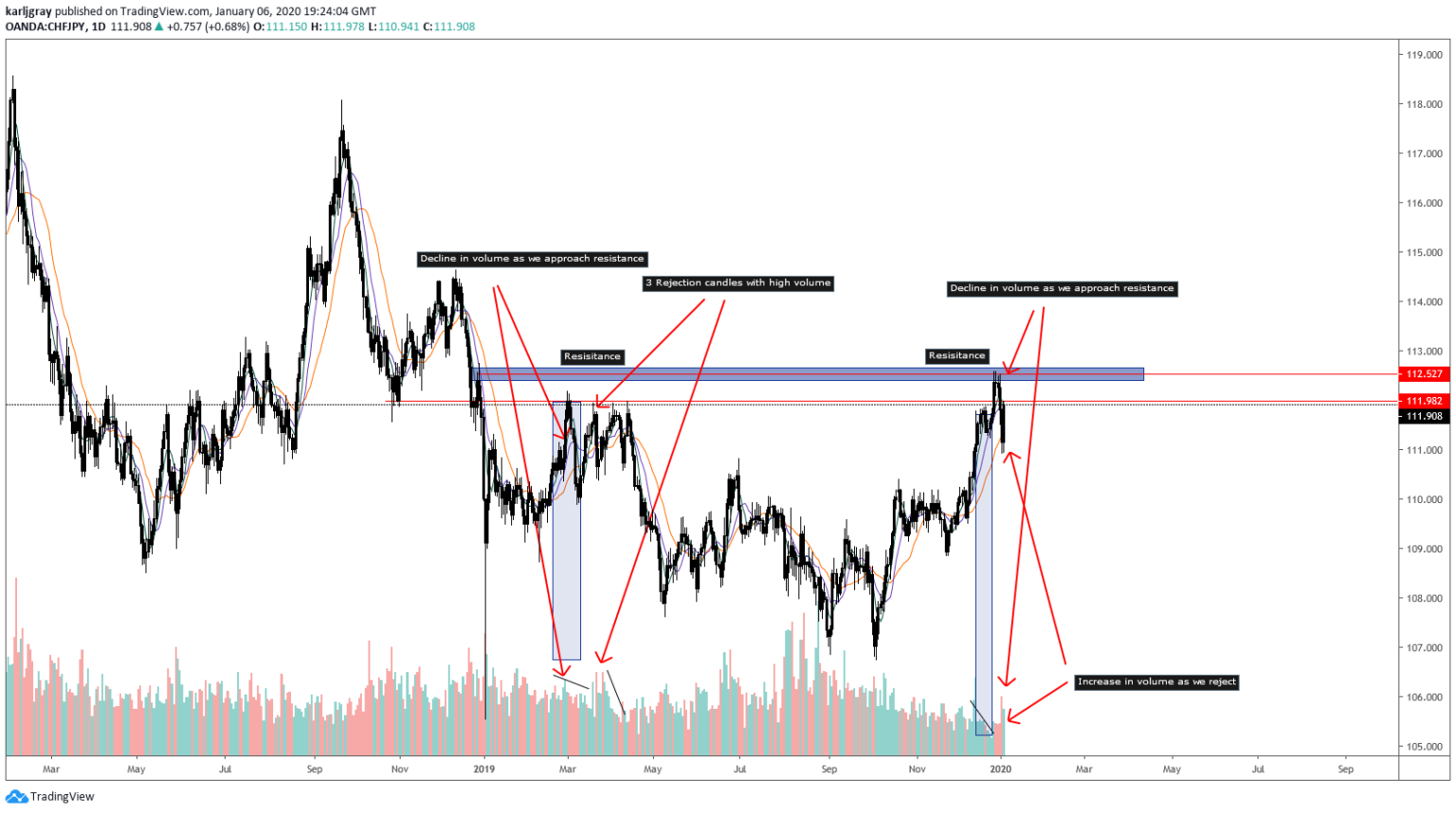
A genuine break usually comes with more activity: bigger candles, faster movement and, where it exists, higher volume. One caution for forex traders: spot FX has no central exchange, so the volume on most platforms is tick volume, a count of price changes rather than traded size. Treat it as a rough guide only.
Our post on using volume to confirm a trend goes into this in more depth.
Trend, context and the retest
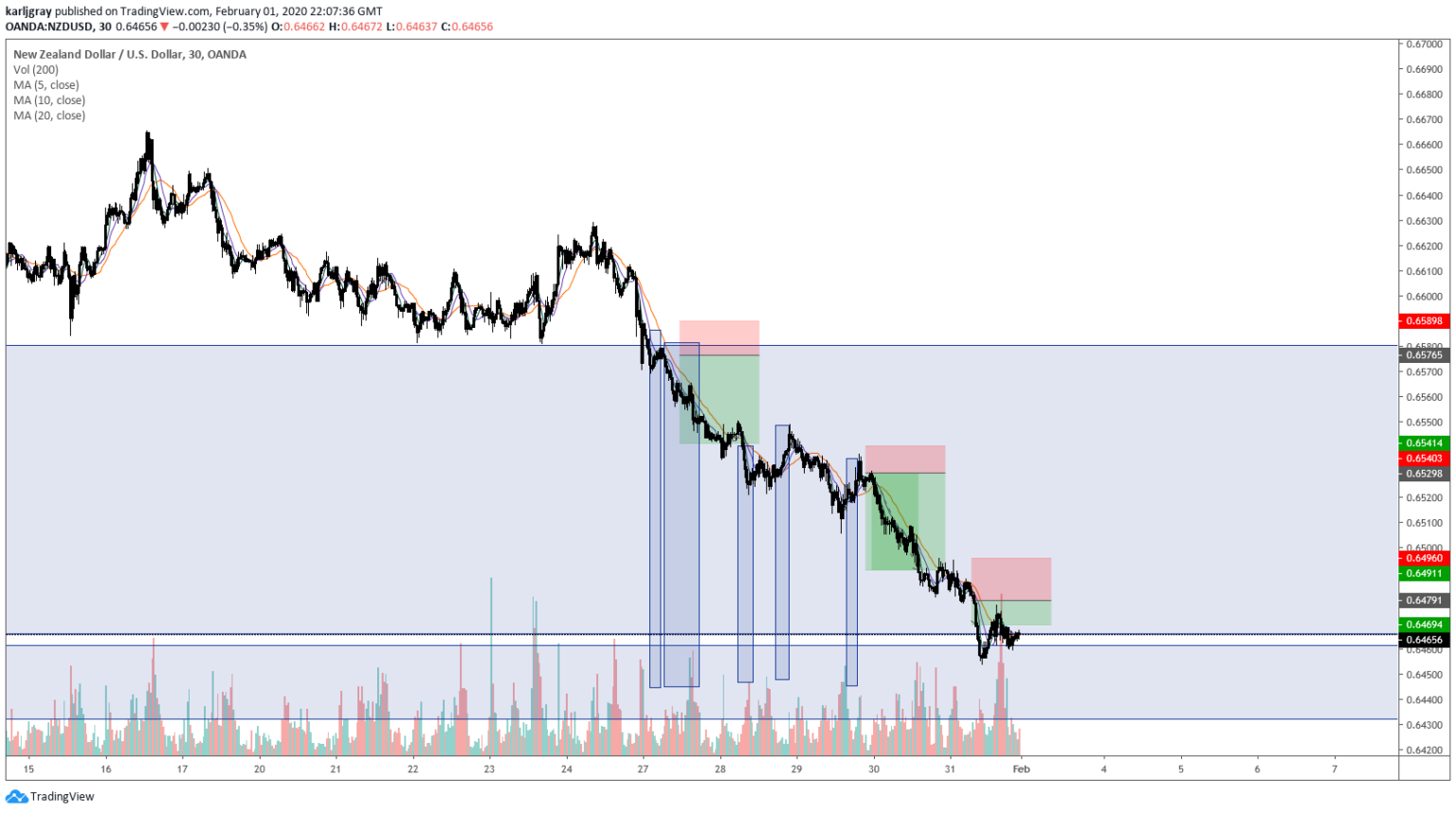
Breaks against the higher-timeframe trend fail more often in our experience, because they run straight into the dominant side of the market. Spotting the early signs of a new trend helps you tell a genuine change of direction from a counter-trend poke.
The retest is the most patient filter. Price breaks, pulls back to the old level and holds it as new support or resistance. Strong breakouts sometimes never retest, so you will miss some moves. Our breakout and retest strategy guide turns that filter into a full entry method.
True breakout vs false breakout: signs to compare
The table sums up what we look for on the chart. The more rows that point the same way, the more confidence the break deserves.
| Check | Signs of a true breakout | Signs of a false breakout |
|---|---|---|
| Candle | Strong body closes beyond the level | Long wick, close back inside range |
| Participation | Volume and candle range expand | Thin volume, small candles |
| Trend | With the higher-timeframe trend | Against the bigger trend |
| Follow-through | Next candles hold above the level | Price stalls straight away |
| Retest | Old level holds as new support | Price slices back through it |
| Timing | Normal session, no major data due | Thin hours or just before news |

Worked example: entry on the break vs entry on the retest
Example: on a £5,000 account, a trader risks 1%, or £50, per trade. A market has a range high at 1.2500 and price breaks above it. The figures are hypothetical.
Entering on the first push at 1.2530 with a stop back inside the range at 1.2470 gives a 60-pip stop. To risk £50, the stake is about 83p per pip. If the break is false, the full £50 is lost within minutes.
Waiting for a retest, the trader enters at 1.2510 as price holds the old high, with a stop at 1.2480. The stop is now 30 pips, so the same £50 risk allows about £1.67 per pip. The trade-off is that if price never comes back, there is no trade at all.
The retest does not make the trade safe, but a tighter stop from a better location improves the reward relative to the risk. Our article on how much to risk on each trade explains where the 1% figure comes from.
Common mistakes when trading breakouts
- Pre-placed entry orders at obvious levels. A buy-stop just above a range high fills on the wick, before you can judge the close.
- Chasing after a missed move. Entering far from the level means a wide stop or a poorly placed one.
- Stops too tight inside the old range. Normal noise around the level takes you out. See where to place a stop-loss with price action.
- Trading breaks into news. Releases can push price through levels and back again in seconds.
- Ignoring the room to the next level. A break that runs straight into resistance has little to offer.
Plenty of breakouts are simply not worth taking. Knowing when not to trade and stay flat is as much a part of the method as the entry itself.

Frequently asked questions
Should I wait for a candle close before entering a breakout?
In most cases, yes. A close beyond the level on your trading timeframe filters out wick-only fakeouts. The cost is a later entry.
Does high volume always confirm a breakout?
No. Rising participation is supportive, but it is one piece of evidence, not proof. In spot forex the volume shown is usually tick volume, so we weigh it alongside candle size and follow-through.
Can you trade a false breakout?
Some traders fade fakeouts, entering back inside the range with a stop beyond the false-break extreme. It is a separate setup with its own risks, because a level that failed once can still break cleanly on the next attempt. If you would rather trade inside the range itself, see our range trading strategy for sideways markets.
Is a retest required for breakout confirmation?
Not always. A retest gives a better-defined entry and stop, but strong moves sometimes run without one. Decide in advance whether your rules require it, and accept the trades you will miss.
Next steps
Start with our complete beginner’s guide to price action trading, then use the filters and triggers entry checklist and ask whether a trade is worth the risk before you commit.
If you want to learn the full process in order, the free basics section of our price action trading course is a good place to begin.
This article is for education only and is not financial advice. Trading leveraged products such as CFDs and spread bets carries a high risk of losing money.