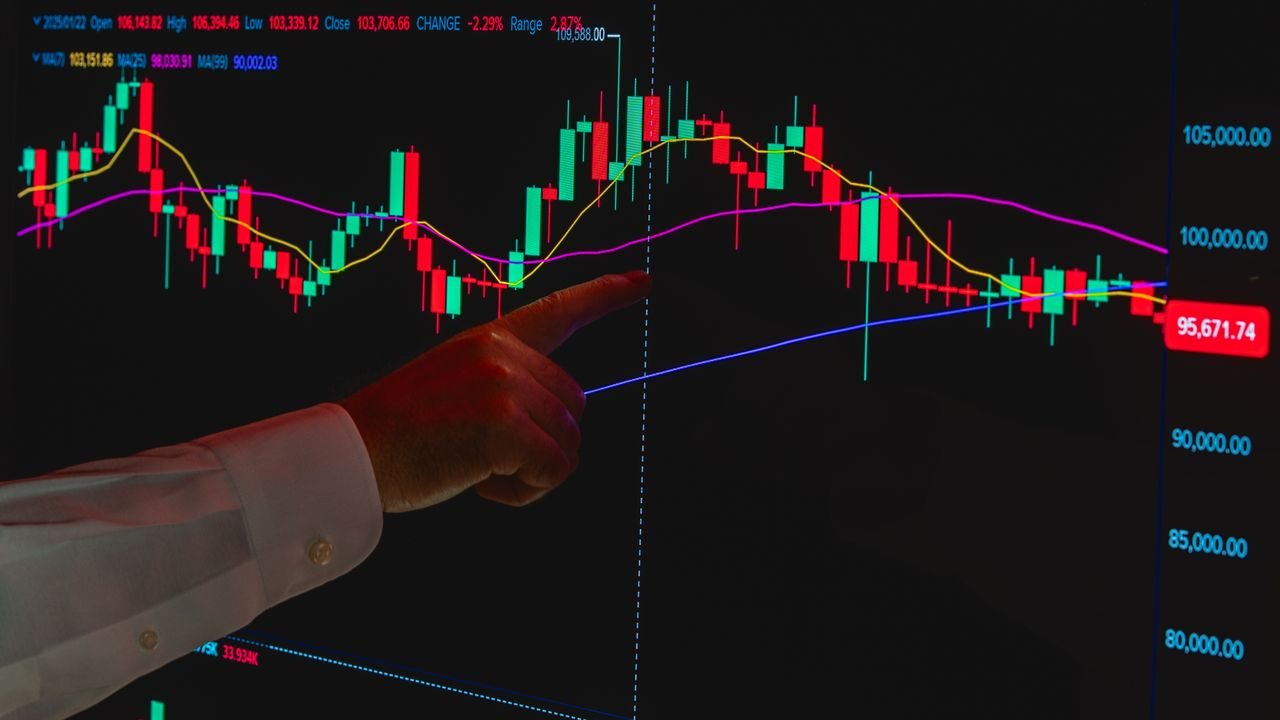

A watchlist decides what you look at, and what you look at decides what you trade. Here is how to build a trading watchlist of five to ten markets that suit your account, your hours and your method, plus a weekly scan and the rules we use to prune it.
Quick answer: how do you build a trading watchlist?
Start with markets you can actually trade, then keep only those that pass five checks: 1) enough liquidity for tight spreads, 2) volatility that fits your stop and stake, 3) clean, readable structure, 4) low overlap with the rest of the list, and 5) active hours that match yours. Aim for five to ten, and review them weekly.
What a weekly market watchlist is for
A weekly market watchlist is a short list of markets you have already studied and are ready to trade if price reaches a level you care about. Its job is to narrow your attention so each chart gets proper analysis.
In our experience, beginners who scan thirty charts a day end up trading whatever looks busiest. Five to ten markets is enough to find opportunities most weeks and few enough to know each one well.

Five criteria for every market on the list
Every market earns its place by passing the same checks. Run them when you add a market and whenever it feels awkward to trade.
Liquidity and trading costs
Liquid markets have plenty of buyers and sellers, so spreads stay tight and price moves in a steadier way. Thin markets can jump through your stop and cost more to enter and exit.
Volatility that suits your stop size
A market can be perfectly good and still wrong for your account. If its normal swings need a stop so wide that your stake becomes tiny, or below the provider’s minimum, it does not belong on your list yet. Our guide on how to calculate position size from your stop shows the maths.
Clean structure
Some charts respect levels and trend in clear swings; others chop back and forth with long wicks in every direction. We favour markets where obvious supply and demand zones have held in the past. If you cannot mark the key levels in a few minutes, the chart is telling you something.
Correlation with the rest of the list
EURUSD, GBPUSD, AUDUSD, NZDUSD and USDCAD look like five markets, but they all lean on the US dollar. When the dollar moves, they often move together, so five trades can become one large bet. Our explainer on what moves the US dollar covers why.
Session fit with your hours
Markets are most active when their home centres are open. If you can only watch charts from 7pm UK time, an index that does most of its moving at the London open is a poor fit.

| Watchlist criterion | What to check | Keep or drop |
|---|---|---|
| Liquidity | Typical spread in your hours | Drop if spreads are often wide |
| Volatility vs stop | Stake at your normal risk | Drop if stake falls below minimum |
| Clean structure | Levels that held on the daily chart | Keep if levels are easy to mark |
| Correlation | Shared currency or driver | Keep one or two per driver |
| Session fit | Active hours vs your screen time | Drop if it moves while you sleep |
How to build a trading watchlist step by step
The first time you work out how to build a trading watchlist it takes an evening; after that it is quick.
- List the markets your account and provider let you trade, from forex to indices and commodities.
- Cut anything you cannot watch during its active session.
- Check typical spreads and remove the expensive ones.
- Look at each daily chart and keep those with readable structure, using a top down chart analysis from weekly to daily.
- Group the survivors by driver (US dollar, euro, risk mood, energy) and keep no more than two per group.
- Size a sample trade on each and drop any where the stake would be unworkable.
- Stop at ten. Anything beyond that goes on a reserve list.
If you are new to currencies, our guide on how to trade forex for beginners in the UK explains pairs, pips and spreads first. Mixing in a commodity or an index adds variety, and our guide to trading commodities in the UK covers their drivers.
Worked example: two markets, one account
Example: on a hypothetical £5,000 account, a trader risks 1%, or £50, per trade. Market A usually needs a stop 40 points beyond structure, so the stake is £50 ÷ 40 = £1.25 per point. Market B needs 250 points, giving £0.20 per point.
If the provider’s minimum stake on Market B were £0.50 per point, the trader would have to risk £125 to take the trade. That breaks the 1% rule, so Market B goes on the reserve list until the account grows. Spread bets and CFDs are leveraged, so oversized stakes can lose money quickly; the list should protect you from that.

A weekly scanning routine
Once the list exists, the weekly work is quick. Use the same weekend slot and the same order each time.
- Note where price sits relative to the key weekly and daily levels.
- Flag the two or three markets nearest a level that matters.
- Check scheduled data for the currencies involved. UK figures are published on pre-announced dates shown on the ONS release calendar.
- Write one line per flagged market on what would make you interested.
The deeper preparation, with scenarios and a risk budget for the week, belongs in a separate routine. We cover it in how to prepare for a big week in forex.

Pruning the list: when to drop a market
A list only stays useful if markets leave as well as join. We review ours every month or so and remove a market when it fails a check for several weeks in a row.
- Its structure has turned choppy and levels keep failing.
- Volatility has expanded so much that your stake no longer works.
- It now moves almost in step with another market on the list.
- You keep skipping it because it moves outside your hours.
Dropping a market is not a forecast; it is housekeeping. Quiet periods are also a cue to read when not to trade and how to stay flat, because a shorter list should mean fewer, better trades.
Common mistakes when building a watchlist
- Adding last week’s biggest mover. Yesterday’s excitement is rarely tomorrow’s clean setup.
- Five versions of one bet. Several USD pairs, or three tech-heavy indices, concentrate risk.
- Ignoring your own hours. A market that moves overnight tempts you into late, tired decisions.
- Never pruning. Lists grow until every chart gets a glance and none gets analysis.
- Treating the list as a to-do list. Being on the watchlist means watching, not trading.

Spreading attention across unrelated drivers is the same idea as diversifying a trading portfolio, applied to what you watch rather than what you hold.
Frequently asked questions
How many markets should be on a trading watchlist?
Five to ten suits most part-time traders. Fewer is fine if you are new, because knowing three markets well beats glancing at twenty.
How do I choose which forex pairs to watch?
Start with liquid majors that are active in your hours, then check their spreads and structure. Avoid holding several pairs that share the same currency, unless you deliberately want that exposure.
How often should I update my watchlist?
Scan it weekly and prune it every month or so. Change it when a market repeatedly fails your criteria, not because of one quiet week.
Can I mix forex, indices and commodities on one list?
Yes, and it can reduce overlap if the markets answer to different drivers. Learn each one’s hours and costs first.
Next steps
Our guide to price action trading for beginners covers the method we apply to every chart on it.
If you want a structured route from foundations to trading psychology, the basics section of The Two Traders price action trading course is free.
This article is for education only and is not financial advice. Trading leveraged products such as CFDs and spread bets carries a high risk of losing money.