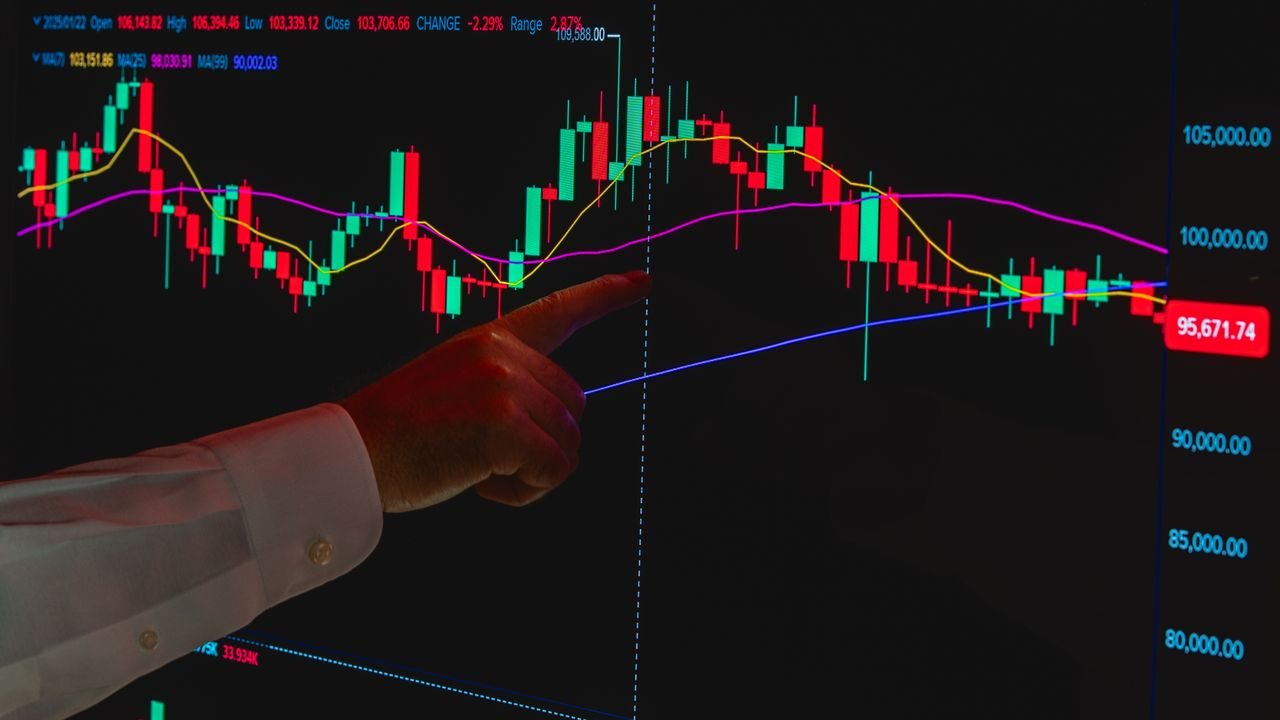

Knowing what to do after a big winning trade matters more than the win itself. The day after a good result is when traders most often loosen their rules, raise their size and hand the gains back. Here is why that happens, and the routine we use to keep risk where it was.
Quick answer: what should you do after a big winning trade?
Keep your risk per trade the same, log and review the trade, and check it followed your plan. Do not raise position size because you feel confident or because the money feels like profit. If you notice euphoria, take a short break before the next trade. Size should only change through a rule you wrote in advance.
Why a big win is a risky moment
After a loss most traders become careful. A big win feels like proof, and proof makes people bold. That is the core of overconfidence after winning trades: the result of one day starts to feel like evidence of skill.
The trouble is that a single day, or even a streak, is a tiny sample. Runs of wins and losses happen by chance, even with a sound method. As we explain in why win percentages on their own tell you little, what matters is the size of your losses against your wins over many trades.

Overconfidence rarely announces itself. It shows up as small changes: a setup that only half meets your criteria, or a stop moved because you “know” where price is going.
The house money effect: why profits feel like free money
Behavioural economists have a name for this. The Nobel committee’s summary of Richard Thaler’s work on mental accounting notes that someone who has recently gained money on the stock market tends to take greater risks than someone who has recently lost. Thaler calls this the house money effect.
It comes from mental accounting: we file money into separate accounts in our heads. Profit from today sits in a “winnings” account, and losing it feels less painful than losing the original deposit. But a pound of profit buys exactly the same risk as a pound you paid in.

In practice it looks like this:
- Doubling position size “because it’s only profit at risk”.
- Widening or removing a stop on a trade funded by earlier gains.
- Holding a loser longer because the account is still up on the week.
The mirror image is the break-even effect, chasing a loss with bigger risk. We cover it in how to stop emotional trading.
Why position size must not rise after a winning streak
Your position size should come from your account size and your stop distance, not your mood. If you risk a fixed percentage of the account, your size already grows slowly as the account grows. That is the only automatic increase you need; our guide to how much to risk per trade explains why most traders keep it small.
Sizing up on confidence is dangerous because the next losing run is not cancelled by the last winning one. A normal sequence of losses, taken at double size, removes far more than you expect. Any planned increase belongs in your written plan, based on a large sample of trades.
Worked example: same streak, two responses
Example: on a £5,000 account, a trader risks 1% per trade, which is £50. After a strong day the account stands at £5,400, so 1% is now £54, a small rise that follows the rule.
A second trader with the same result decides to risk 2% “of the profit”. That is £108 per trade. Four ordinary losses in a row, which any method will produce from time to time, cost £432 and wipe out the whole gain. The first trader, at £54 per trade, loses £216 on the same run and keeps most of the good day.
Same method, same market; only the reaction to the win differed. Check your own numbers with our guide to calculating position size from your stop distance.
What to do after a big winning trade: a simple routine
We treat the hours after a big win as part of the trade:
- Log the trade straight away: entry, stop, exit, size and the reason you took it.
- Check it against your plan. Did it meet every filter, and was the size correct?
- Separate outcome from process. A winner that broke your rules is still a mistake.
- Write tomorrow’s risk per trade on paper before you look at a chart, and keep it the same.
- If you feel euphoric, take a break: a walk or the rest of the day off.
- Restart with your normal checklist, not with the market that just paid you.

| What you feel | What it tempts you to do | The rule that protects you |
|---|---|---|
| “I’ve cracked it” | Trade more setups | Same filters, same checklist |
| “It’s only profit” | Double the size | Same % risk per trade |
| “This market owes me more” | Chase the next move | Wait for a fresh setup |
| “I can afford a wider stop” | Loosen or move stops | Stops set by structure only |
| “I’m on a roll” | Keep trading late | Fixed session times |
Many of these rules echo the ones we use when deciding when not to trade at all. Adrenaline, good or bad, is a poor basis for fresh decisions.
Common mistakes after a good day
Most damage after a win comes from a few repeat errors:
- Confusing a good day with a proven edge. One result says little; hundreds of trades say something.
- Abandoning the stop. The same discipline we describe in why a stop loss is non-negotiable applies on good days too.
- Skipping the review. Traders review losses but rarely winners, so lucky rule breaks go unnoticed.
- Letting a loser run because the week is green. We would rather cut losses early whatever the running total.

None of these mistakes needs a bad market. They only need a trader who feels, for a day, that the rules are for other people.
From the archive (November 2017)
This is a historical post by Karl, kept for context. Past results are not a guide to future results. The original sign-up links and video are no longer part of this page.
Friday saw my biggest profit ever, as cryptos rose sharply across the board.
My longs on Ethereum, Bitcoin, Bitcoin Cash and Litecoin that I signalled over the last few weeks saw a profit of nearly $4000 over the day. On top of this, my Forex and Commodity trades all pushed in the right direction for another $1000.
Frequently asked questions
Should I increase my position size after a winning streak?
Not because of the streak itself. If you risk a fixed percentage of your account, your size already rises a little as the account grows. Any bigger change should come from a written rule decided when you are calm.
Should I stop trading for the day after a big win?
Many traders do, and it is a sensible rule if you notice euphoria or a strong urge to keep going. If you carry on, use your normal size and full checklist.
What is the house money effect in trading?
It is the tendency to take more risk after a gain, because recent profit feels less “real” than money you paid in. Your account treats every pound the same, so your risk rules should too.
How do I review a winning trade?
Ask whether it met your entry criteria, whether the size and stop were correct, and whether you managed the exit to plan. A rule-breaking winner deserves the same scrutiny as a loss.
Next steps
Overconfidence is one of the hurdles we cover in our pillar guide to the five psychological hurdles in trading psychology. To put numbers to your risk, read how to build a rules-based risk model. If you want a structured path, the basics section of our price action trading course is free to start.
This article is for education only and is not financial advice. Trading leveraged products such as CFDs and spread bets carries a high risk of losing money.