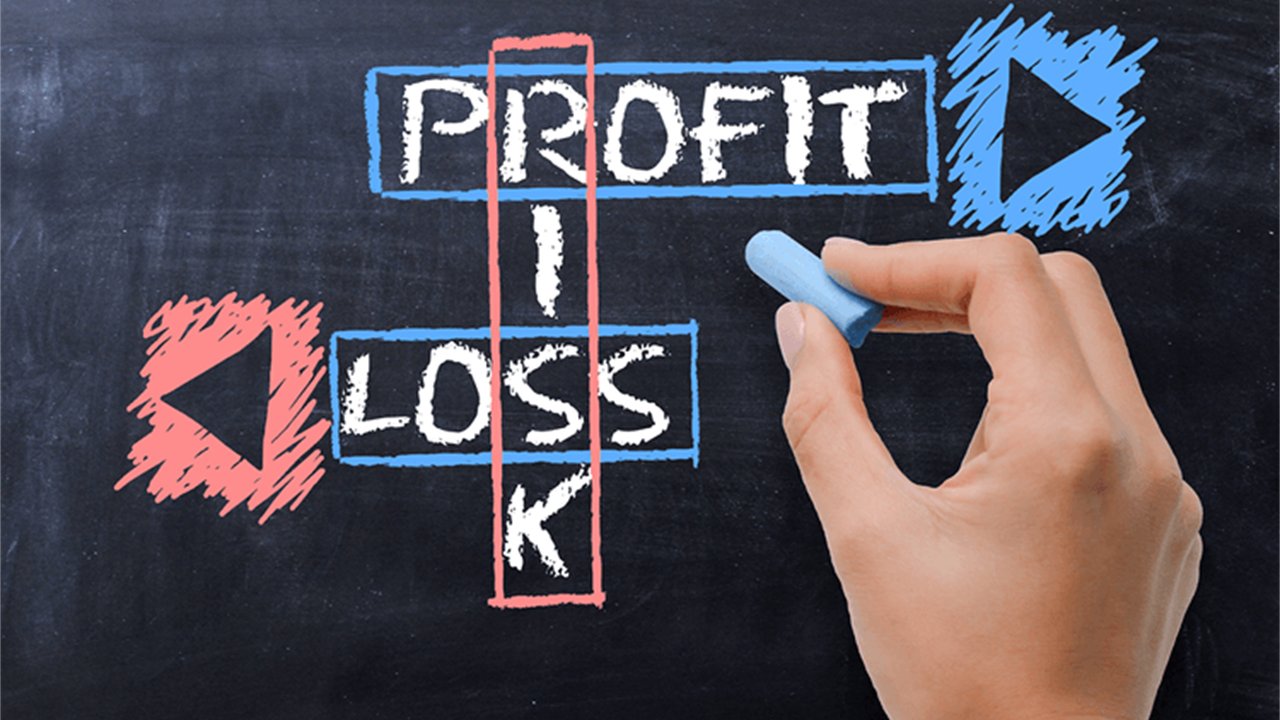
When traders compare win rate vs risk reward, neither number means much alone. What decides whether you make or lose money over many trades is the two together: how often you win and how much, against how often you lose and how much.
Quick answer: does win rate matter more than risk:reward?
No. A trader who wins 90% of the time can still lose money if the average loss is far bigger than the average win. Expectancy combines both: (win rate × average win) − (loss rate × average loss). If that number is positive after costs, a modest win rate is fine.
Why win percentages are irrelevant: the original 2018 post
We first published this post in October 2018. The original words are kept below.
As a new trader you may be thinking winning all your trades is important, it can be difficult to understand why winning 80-90% of your trades isn’t important especially with a lot of companies claiming these success rates. The sooner you come to realise that losing trades is part of the game the better! In fact, losing 50% of your trades is normal and we will go on to talk about this later on.
Winning and being right
Winning and being right are things we associate with people being profitable and successful. If i told you i’m wrong 50/60% of the time you’d probably have the opinion that i’m a bad trader but if i told you i’m almost always right and only lose 10% of my trades you’d think i’m a fantastic trader. The irony in all of this is that professional traders have worked out winning, and more specifically their overall win percentage, has almost nothing to do with how profitable or unprofitable they are in the market. Sounds confusing doesn’t it!!
The two examples
One of the most important rules of trading is RISK MANAGEMENT , what does this mean? It means ensuring your winners are bigger than you losers. For example lets take someone claiming a win percent of 90 and a starting bank of £10000 risking 3% (£300) per trade:
Can you see now how having a win rate without a good risk:reward would end in a loss? As you can see, the winning trades are less than the amount you are risking (bad risk:reward).
Lets take a look at someone with a 50% win rate and a starting bank of £10000 risking 3% (£300) per trade:
From the above chart you can see by ensuring our winners are bigger than the amount we are risking per trade the outcome is a profit.
The original charts did not survive the site’s restoration, so we rebuild the comparison below with hypothetical numbers.
Keep risk constant
One of the biggest mistakes traders make early-on in their careers is to vary their risk amount on each trade depending on the previous trade’s outcome. The reason this is a mistake, is because the next trade’s outcome is completely independent of the previous trade, that is if you are sticking to your trading plan and trading off logic and not emotion.
Be the master of your trading strategy, this will give you the best chance of being profitable. When I look at a chart, I am looking for very specific price action setups formed at certain levels in the market. There’s no “guessing” or doubt in my trading anymore…because I have mastered price action trading.
When we trade in this manner, combined with proper money management, your winning percentage really doesn’t matter. The key here is being methodical and picky in how you enter the market; don’t enter unless your trading strategy is actually telling you to.
Win rate vs risk reward: the maths that matters
Win rate is the share of trades that make money. Risk:reward compares the average win with the average loss, so 2:1 means winners are twice the size of losers. Our guide to the risk reward ratio explained shows how to plan it before entry.
Expectancy and the breakeven win rate
Expectancy is the average result per trade: (win rate × average win) − (loss rate × average loss). It is often expressed in R, where 1R is the amount risked. For any ratio, the breakeven win rate is 1 ÷ (1 + reward-to-risk), before costs. Our full guide to expectancy in trading works through it in pounds and R.
| Average win vs average loss | Breakeven win rate |
|---|---|
| 0.1 to 1 (win £30, lose £300) | About 91% |
| 1 to 1 | 50% |
| 2 to 1 | About 33% |
| 3 to 1 | 25% |
The first row is the point of the original post: a 90% win rate with winners a tenth the size of losers sits just below breakeven.

Worked example: an expectancy table
Example: three hypothetical traders each start with £10,000 and risk a flat £300 per trade, the 3% from the original post. We ignore costs to keep the arithmetic clear.
| Hypothetical trader | Win rate and average win | Expectancy per trade | After 20 trades |
|---|---|---|---|
| A: high win rate | 90%, wins £30 | −£3 (−0.01R) | −£60 |
| B: coin-flip win rate | 50%, wins £450 | +£75 (+0.25R) | +£1,500 |
| C: low win rate | 40%, wins £600 | +£60 (+0.2R) | +£1,200 |
Trader A loses despite being right nine times in ten. Trader C is wrong more often than right but finishes ahead, because each winner covers two losers.
A 3% risk is also higher than many traders use, as our guide on how much to risk per trade explains, and how to calculate position size from your stop turns that risk into a stake.

Why traders end up with high win rates and poor risk:reward
Few people plan tiny winners. The pattern comes from behaviour: banking small profits quickly and holding losers in hope. Setting exits in advance helps; see how to take profit in trading.
That matches Kahneman and Tversky’s work on prospect theory. The Nobel Prize summary of their research on decisions under risk notes that most people seem more averse to losses than partial to gains of the same size.
- Moving the stop further away turns a planned 1R loss into 2R or 3R; see where to place a stop loss with price action.
- Closing at the first sign of profit shrinks the average win, as our tip on cutting losses early instead of winners explains.
- Trading on emotion after a loss makes both worse; see how to stop emotional trading with a daily routine.

When win rate does matter
A low win rate means longer losing streaks. At a 40% win rate, the chance that any given five trades all lose is 0.6 to the power of five, about 8%. Our guide to risk of ruin shows how risk per trade changes the odds of losing half the account.
That is why keeping risk constant matters. Doubling your stake after losses lets a normal streak do serious damage, and with leveraged products such as CFDs and spread bets losses can build faster than a beginner expects.
Twenty trades also say little about a method. Judge expectancy over a larger sample with a weekly trading review of your results.
Common mistakes
- Judging a method by win rate alone. Check average win and average loss too.
- Ignoring costs. Spread and slippage hurt small-target methods most.
- Confusing planned and realised risk:reward. A 2:1 plan means little if you exit at 0.5:1.
Frequently asked questions
Does win rate matter in trading?
Only alongside risk:reward. A high win rate with small winners and large losers can lose money, while a 40% win rate with winners twice the size of losers can be profitable before costs.
What is a good risk:reward ratio?
There is no single right ratio. Many price action traders look for at least 2:1 on entry, which needs a win rate above about 33% to break even.
Why am I losing money with a high win rate?
Usually because your average loss is several times your average win. Common causes are taking profits too early and moving stops further away.
Next steps
Our guide to building a rules-based risk model puts risk, stops and position size into one plan. Before any entry, ask whether a trade is worth the risk based on price position. The basics section of our price action trading course is free to start.
This article is for education only and is not financial advice. Trading leveraged products such as CFDs and spread bets carries a high risk of losing money.