
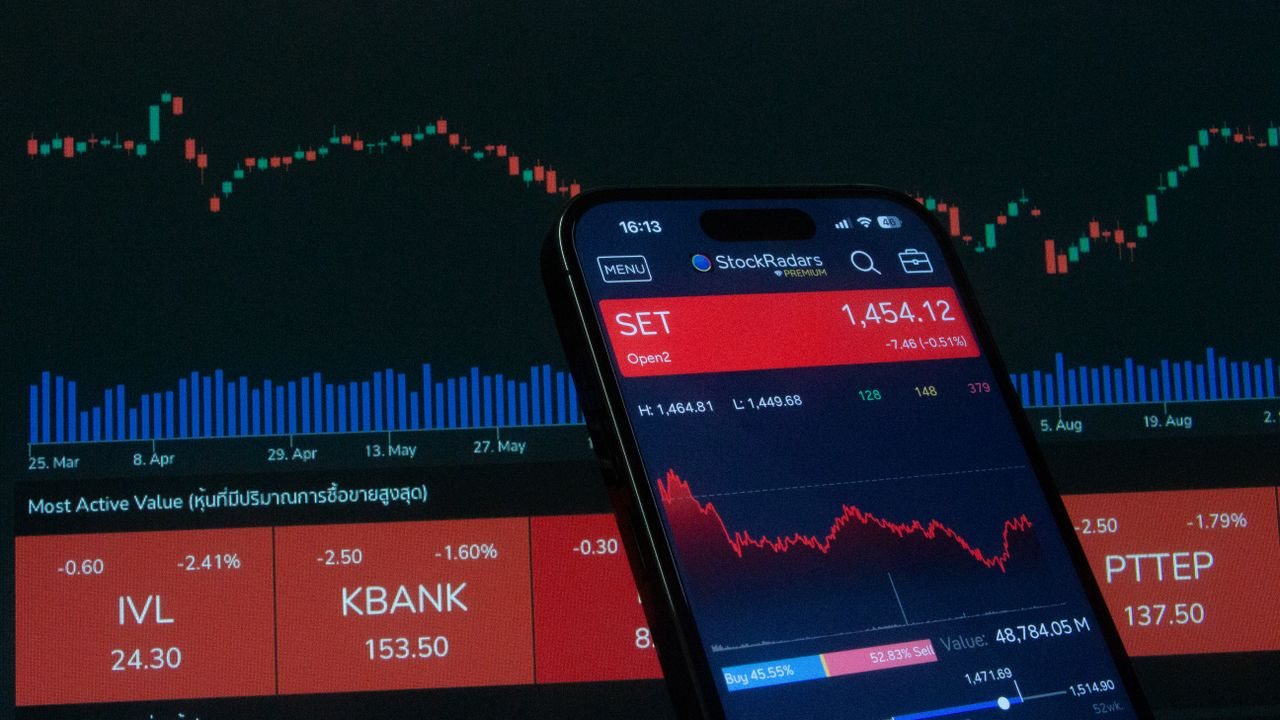
A gap trading strategy is a set of rules for trading the jump that appears when a market opens at a different price from its last close. You either fade the gap, betting that price returns to the previous close, or trade with it, betting the move continues. Which one makes sense depends on the type of gap, where it opens relative to key levels and how the first part of the session behaves.
Quick answer: how do you trade a price gap?
1) Mark the previous close and the nearest key levels. 2) Identify the gap type: common gaps often fill, breakaway gaps often run. 3) Let the open settle before acting. 4) Fade towards the previous close if price stalls, or trade with the gap on a held retest. 5) Size for slippage, because stops can fill beyond their level.
What a price gap is and why it happens
A gap is an empty space on the chart between one candle’s close and the next candle’s open. It forms when news or orders build up while a market is shut or thinly traded, so the first trade after the open is struck well away from the last one.
- Index gaps: cash stock indices close overnight, so earnings, economic data or overseas moves can open them higher or lower. Our guide on how to trade indices in the UK covers the sessions.
- Weekend gaps in forex: currencies trade around the clock on weekdays, so gaps appear mainly when trading restarts after the weekend.
- News gaps: a surprise interest rate decision or data release can make price jump during a session, even without a close.
Spread-bet and CFD providers may quote some index markets out of hours, so the gap on your platform can be smaller than the gap in the underlying cash index. Always check which price your chart is showing.

The four types of gap
Classic technical analysis sorts gaps into four types. The labels are only certain in hindsight, but location gives clues.
| Gap type | Where it appears | Tends to |
|---|---|---|
| Common | Inside a range, on no major news | Fill fairly soon |
| Breakaway | Out of a range or through a key level | Run, often unfilled for a long time |
| Runaway (continuation) | Midway through a strong trend | Extend the trend |
| Exhaustion | Late in a stretched trend | Fill and reverse |
The breakaway gap matters most, because it is the one that punishes traders who believe every gap must fill. If the open jumps cleanly through a level that has held for weeks, treat it as a breakout first; our guide on how to avoid false breakouts explains how we judge it.

Do all gaps fill?
“Gaps always fill” is one of the most repeated sayings in trading, and it is misleading because it has no deadline. A gap that fills two years later was no help to someone who sold short on the morning it formed. Intraday gaps between candles are a different idea, covered in our guide to fair value gap trading.
Small common gaps, including most weekend gaps in major currency pairs, often close within the session. Large gaps on real news are a different matter: they reflect a change in what buyers and sellers think the market is worth. We treat the previous close as a target that may be reached, never as a promise.

A gap trading strategy step by step
This is our routine, for index and forex charts alike, with levels marked before the open.
- Mark the previous close and key levels. The previous close is the fill target; our guide to which key levels count and how to rank them covers the rest.
- Check the cause. Was there major news, or is the gap just drift? Use an economic calendar for trading to see what was released.
- Classify the gap. Did it open inside the old range (likely common) or through a key level (possibly breakaway)?
- Let the open settle. We wait at least 15 to 30 minutes on indices, and longer on Sunday-evening forex, because spreads are widest at the start; see how the bid-ask spread adds to trading costs.
- Choose fade or go. Fade if price stalls at a level and starts back towards the close. Go with the gap if it holds above (or below) the broken level on a retest, as in our breakout and retest strategy.
- Set the stop beyond the session extreme. For a fade, above the high of the open (gap up) or below the low (gap down).

Stop risk: why gaps can skip your stop
A stop-loss is usually a stop order: once price reaches your level, it becomes an order to close at the next available price. If the market opens beyond your stop, that next price may be far worse. Our guide to market, limit and stop orders explains the mechanics. Our guide to slippage in trading explains how to plan for it.
Thin markets make this worse. On 7 October 2016, sterling fell around 9 per cent against the dollar in early Asian trading, according to the Bank for International Settlements, which pointed to the illiquid time of day and stop-loss orders being executed as the currency fell. It was not a weekend gap, but it shows how price can jump through levels in thin trading.
That is why we hold fewer positions over weekends and before big announcements. Some UK providers offer stops with a fixed fill price for a premium; check the terms with yours. Leverage magnifies a gap, so a leveraged position can lose more than the planned risk, as our guide to margin and leverage explained shows. Holding overnight also has a running interest cost, which the carry trade tries to turn into income.
Worked example: a hypothetical index gap fade
All figures are hypothetical. On a £5,000 account risking 1 per cent (£50), an index closed at 7,500 and opens at 7,540 with no major news, inside last week’s range and below resistance at 7,560.
- Wait: after 30 minutes, the session high is 7,552 and price stalls.
- Entry: sell at 7,535 when a 5-minute candle closes back below the open.
- Stop: 7,560, above the session high and resistance, so 25 points of risk.
- Size: £50 ÷ 25 points = £2 per point on a spread bet.
- Target: 7,502, just before the previous close, so 33 points.
The reward is only 1.3 times the risk, which is typical of gap fades: the target is fixed by the previous close. If the same gap had opened through 7,560 on strong earnings, we would not fade it at all.

Common mistakes with gap trading
- Fading every gap. Breakaway gaps on real news can run all day.
- Trading the first minutes. Spreads are wide and direction is unclear.
- Ignoring the cause. A gap on major news is not the same as weekend drift.
- Assuming the stop will hold the loss. A gap can fill it far beyond its level.
- Chasing small weekend gaps in forex. A few pips of gap rarely covers the spread at the Sunday open.
Frequently asked questions
Do forex weekend gaps always fill?
No. Many small weekend gaps in major pairs do close early in the week, but there is no rule that they must. Gaps caused by real weekend news can keep running.
What is a gap and go strategy?
It is the opposite of fading: you trade in the direction of the gap, expecting the momentum to continue. It suits breakaway gaps through key levels, ideally after a retest holds.
What time do forex markets open on Sunday in the UK?
Most providers reopen forex on Sunday evening, often around 10pm UK time, though exact times vary. Our guide to the best time to trade forex in the UK covers the sessions that follow.
Is gap trading suitable for beginners?
The concept is simple, but the open is fast and costly. Beginners do better watching and recording gaps for a few weeks before trading them, and checking the list of conditions when not to trade.
Next steps
Gaps are one piece of reading the market; our complete beginner’s guide to price action trading shows how levels, structure and entries fit together.
When not to trade and discovering the beginning of new trends are both topics in our price action trading course, and the basics section is free to start.
This article is for education only and is not financial advice. Trading leveraged products such as CFDs and spread bets carries a high risk of losing money.


