

The spread in trading is the gap between the price you can sell at (the bid) and the price you can buy at (the ask). You pay it every time you open and close a position, so it is a real cost, even when there is no separate commission. Knowing it helps you choose when to trade and where to put stops.
Quick answer: what is the spread in trading?
It is the difference between the bid price (what the market will pay you if you sell) and the ask price (what you pay if you buy). If EUR/USD is quoted 1.0850 / 1.0851, the spread is 1 pip. Every trade starts down by that amount, so the spread is a cost you must cover before you make anything.
Bid, ask and the spread: reading a quote
Every quote has two sides. The bid is the lower price, the one you receive when you sell. The ask, sometimes called the offer, is the higher price, the one you pay when you buy.
The spread is simply ask minus bid. In forex it is measured in pips, the small unit explained in our guide to what a pip is and how pip value works. On indices and commodities it is usually measured in points.
- You buy at the ask and later close by selling at the bid.
- You sell at the bid and later close by buying back at the ask.
- The mid price sits halfway between, and nobody trades there.
That is why a new trade shows a small loss the moment it opens: you have paid to cross the quote.
Why the spread exists
Someone has to stand ready to buy when you want to sell and sell when you want to buy. Banks, market makers and other liquidity providers do that job, and the spread is how they are paid for it and for the risk of holding positions they did not choose. Our guide to liquidity in trading explains why that depth changes through the day.
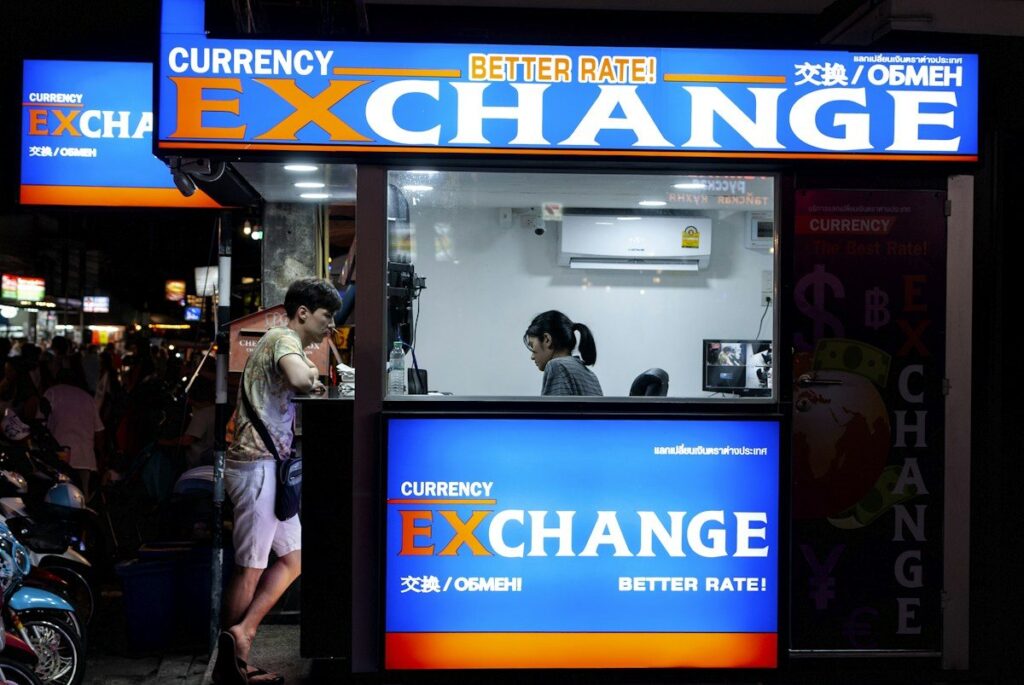
Your broker may also add a mark-up. A bureau de change works the same way: it buys pounds at one rate and sells euros at another. In trading the gap is far smaller, but you pay it far more often.

What makes a spread wide or tight
Spreads move with how many people are trading and how uncertain prices are. These are the main drivers we see on the desk:
- Liquidity: heavily traded markets such as the major currency pairs usually have tighter spreads than exotic pairs or small-cap shares.
- Time of day: spreads are often tightest when the big sessions are open, which our guide on the best time to trade forex in the UK covers.
- The daily rollover: around 5pm New York time (late evening in the UK), many dealers reset their pricing and spreads often widen for a few minutes.
- News: before and just after major releases, dealers widen spreads because the next price is uncertain. Our guide on how to use an economic calendar for trading shows when those releases fall.
- Account type: some accounts quote wider spreads with no commission; others quote raw spreads and charge commission.
Over the long run, spreads have become much tighter. A Bank for International Settlements study of 25 years of high-frequency data found that average bid-ask spreads fell across shares, government bonds and currencies, but in shares and bonds sudden blow-outs became more frequent. Currencies were the exception, but a quiet average says little about the worst minute of the day.
Fixed, variable and raw spreads compared
Brokers price the spread in different ways. None is automatically cheaper; it depends on how and when you trade.
| Factor | Fixed spread | Variable spread | Raw spread + commission |
|---|---|---|---|
| Quoted spread | Same most of the time | Moves with the market | Close to the underlying market |
| Extra charge | Usually none | Usually none | Commission per trade |
| In quiet hours | Often dearer | Often cheaper | Often cheapest |
| Around news | May be suspended or requoted | Can widen sharply | Can widen sharply |
| Easy to cost in advance | Yes | Less so | Yes, if you add both parts |
Whatever the model, compare the full round-trip cost, not the headline spread.
Worked example: the spread in pounds
Example, using hypothetical figures. A trader buys a currency pair quoted at 1.2700 / 1.2701, a 1-pip spread, with a position worth £10 per pip.
- Cost to open and close: 1 pip × £10 = £10. The trade shows −£10 the moment it opens.
- Over a month: 20 trades × £10 = £200 in spread alone, before any winning or losing.
- Trading into news: if the spread widens to 4 pips at the release, the same trade costs £40.
- Against the target: on a 20-pip target, a 1-pip spread is 5% of the expected move; on a 5-pip scalp it is 20%.
The shorter your targets, the larger the share of each trade that goes to the spread. That is one reason we prefer setups with room to move, as explained in our guide on whether a trade is worth the risk before you enter.

How the spread affects stops and orders
Most platforms draw their charts from the bid price. A long trade is closed by selling at the bid, so its stop behaves as the chart suggests. A short trade is closed by buying at the ask, which sits above the chart line by the width of the spread.
So if the spread widens at rollover or on news, a short’s stop can trigger even though the chart never reached it. Traders often blame stop hunting by brokers or big players when the real cause is the spread. We add the normal spread, plus a buffer, to stops on short trades for this reason.
The same logic applies to entries. Our guide to market, limit and stop orders shows which side of the quote each order fills on.

The spread vs spread betting: not the same thing
The names cause real confusion. Spread betting is a UK product for trading price moves at a stake per point; the “spread” in its name refers to the two-way price the provider quotes, and it carries a spread cost like any other product. Spread bets are leveraged, so losses can be large and fast; our guide to what spread betting is and how it works in the UK covers the product and its risks.
Common mistakes with the spread
- Ignoring it in backtests. A strategy that only works at the mid price does not work.
- Trading at rollover. Entries and tight stops in the minutes around 5pm New York time pay the widest spreads of the day.
- Chasing tiny targets. Scalping a few pips hands much of each move to the spread.
- Forgetting leverage. On a leveraged product the spread is charged on the full position size, not your margin; see margin and leverage explained for beginners.
Frequently asked questions
Do I buy at the bid or the ask?
You buy at the ask, the higher price, and sell at the bid, the lower one. Closing a long means selling at the bid, which is why a new trade starts slightly negative.
Why do spreads widen at night in the UK?
Around the daily rollover at 5pm New York time, which is late evening in the UK, many dealers reset their systems and liquidity is thin. Spreads usually settle within minutes, but stops can be hit meanwhile.
What counts as a good spread?
There is no single number, because it depends on the market, the time of day and the account type. Compare the full cost, spread plus any commission, with the size of the moves you aim to catch.
Is the spread the only trading cost?
No. Depending on the product there may be commission, overnight funding on positions held past the rollover, and slippage when orders fill away from the expected price.
Next steps
The spread is one line in a wider risk plan. Our guide to building a rules-based risk model shows how costs, stops and position size fit together.
Assessing price position and knowing when not to trade are both covered in our price action trading course, and the basics section is free to start.
This article is for education only and is not financial advice. Trading leveraged products such as CFDs and spread bets carries a high risk of losing money.


