

Loss aversion in trading is the tendency to feel a loss more sharply than a gain of the same size, and to make decisions to avoid that feeling. Research suggests a loss weighs roughly twice as much as an equal gain, which is why traders snatch small profits, sit on losers and hesitate over setups that meet every rule.
Quick answer: what is loss aversion in trading?
It is weighing a £50 loss more heavily than a £50 gain, so you protect yourself from the pain of losing rather than following your plan. It shows up as cutting winners early, holding losers, and skipping valid trades. The main fix is to judge trades in R over a planned sample, not one by one.
What loss aversion means
The idea comes from prospect theory, the work of Daniel Kahneman and Amos Tversky. People judge outcomes as gains or losses from a reference point, usually where they started, rather than by their total wealth. A loss below that point stings more than the same gain above it pleases.
Do losses really hurt twice as much?
Roughly, for many people. The Nobel committee’s scientific background to Kahneman’s 2002 prize notes that Tversky and Kahneman estimated a moderate loss is valued about twice an equally large gain. It is an average from experiments, not a law, and individual estimates vary, so treat “twice” as a rule of thumb.
Why it matters more when you are already losing
The same research describes people as risk averse with gains and risk seeking with losses. In trading terms, a small open profit makes you want to lock it in, while an open loss makes you willing to gamble to get back to break-even. Both reactions run against a sound method. Waiting to get back to your entry price is a form of anchoring bias in trading.
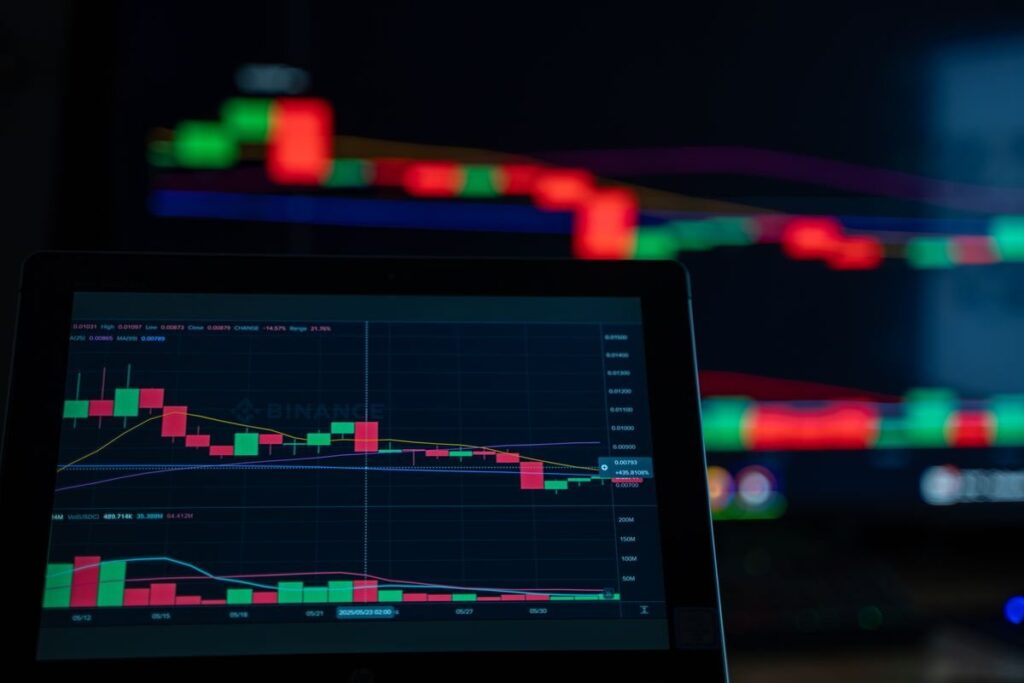
Where loss aversion shows up in a trade
Most articles focus on holding losers. In our experience the bias touches every stage of a trade, including the ones where no money is on the line yet. Holding on because of what a trade has already cost is the sunk cost fallacy in trading.
Before the entry
- Freezing on a valid setup. Every rule is met, but the possibility of a loss feels bigger than the chance of the win.
- Shrinking size after a loss. Not as a planned rule, but because the last loss still hurts.
- Waiting for “more confirmation”. The entry gets later and worse until the trade no longer makes sense.
During the trade
- Cutting winners early. A small open profit feels like something that could be taken away, so it is banked before the target.
- Letting losers run. Closing makes the loss real, so the stop gets moved or ignored. Our guide to cutting losses early with planned exit rules covers the stop discipline that answers this.
After the trade
A loss gets replayed for hours, while a win is forgotten by lunch. That uneven memory feeds the next session’s hesitation, and sometimes the urge to win it back, covered in how to stop revenge trading.
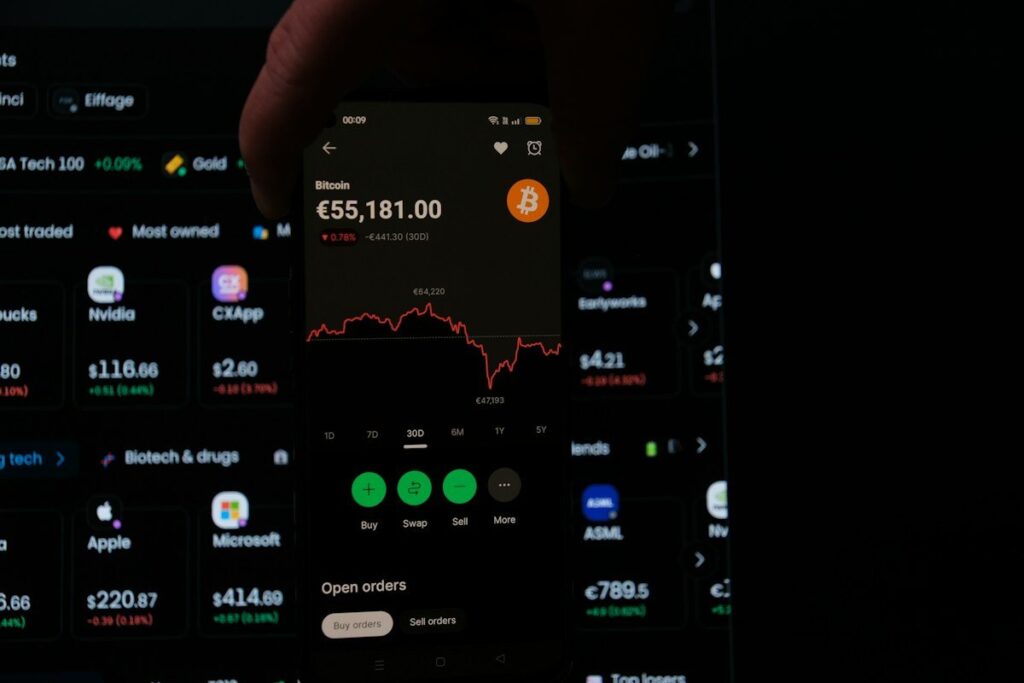
Cutting winners early and the disposition effect
Selling winners too soon and holding losers too long has a name: the disposition effect. Loss aversion is one of the main explanations for it. The combination is costly because it shrinks the average win and stretches the average loss at the same time.
| Moment | Loss-averse habit | Rule that counters it |
|---|---|---|
| Before entry | Skipping a valid setup | If the checklist passes, the trade is taken |
| Open profit | Closing before the target | Exit only at target, trail or planned rule |
| Open loss | Moving the stop away | The stop only moves in the trade’s favour |
| Down on the day | Bigger size to get back to zero | Fixed risk per trade, daily loss cap |
| Review | Judging each trade alone | Judge results in R over a sample |
If you do want to let winners develop without giving everything back, a planned exit beats a nervous one. See how to take profit with targets and exit rules and our trailing stop loss strategy.
Worked example: the same method, two traders
Example (hypothetical): two traders on £5,000 accounts use the same method and risk £50 per trade, which we call 1R. Over 20 trades the method’s plan produces 8 winners at 2R and 12 losers at 1R. That is +16R and −12R, a net gain of 4R, or £200.
The second trader feels each loss twice as hard. They take every winner at +1R instead of waiting for the 2R target, and hold four of the losers until they reach −2R. The winners now total +8R and the losers −16R, a net loss of 8R, or £400.

Same setups, same win rate, a £600 difference, all from exits. This is why win rate matters less than the size of wins and losses. Spread bets and CFDs are leveraged, so a gap past a stop can make a held loser larger still.
How to reduce loss aversion in trading
You cannot remove the feeling, but you can change what it attaches to. These are the steps we use and teach.
- Think in a portfolio, not a single bet. In a study titled “Thinking like a trader”, participants who treated each choice as one of many, as if building a portfolio, showed lower loss aversion and less arousal to losses. Treat each trade as one of the next 20.
- Record results in R, not pounds. “−1R” is a planned cost; “−£50” feels like money leaving your pocket.
- Fix risk per trade in advance. Our guide on how much to risk per trade helps you choose an amount small enough that one loss does not dominate your day.
- Set every exit before entry. Stop, target and any trailing rule go in the platform, so the decision is made while calm.
- Stop watching open P&L. Hide it or step away once orders are placed; every tick against you is a small dose of loss.
- Log the urge. Add a column to your trading journal for beginners: “Did fear of a loss change this decision?”

Common mistakes
- Thinking awareness is enough. Knowing the bias exists rarely changes behaviour in the moment; written rules do.
- Calling early exits “protecting profit”. If the plan said 2R and you took 1R out of fear, the plan was not followed.
- Judging the method on one losing day. Losing streaks are normal; our article on the gambler’s fallacy in trading explains why a streak says little on its own.
- Looking for reasons to stay in a loser. That is loss aversion teaming up with confirmation bias in trading.
- Swinging to the opposite extreme. Ignoring losses entirely leads to oversizing. Some caution is healthy when it is built into fixed risk.

Frequently asked questions
Is loss aversion the same as the disposition effect?
Not quite. Loss aversion is the underlying tendency to feel losses more than gains; the disposition effect is the trading behaviour it helps explain, selling winners too soon and holding losers too long.
Why do I take profits too early but hold losing trades?
Because you are risk averse when ahead and risk seeking when behind. Banking a small gain removes the chance of losing it, while holding a loser keeps alive the hope of getting back to break-even.
Can loss aversion ever help a trader?
A healthy respect for losses is useful when it is turned into rules, such as fixed risk and a daily loss cap. It becomes a problem when it drives decisions trade by trade.
How do I stop hesitating before entering trades?
Make the entry decision a checklist question rather than a feeling, and keep risk small enough that one loss is comfortable. Reviewing in R over 20 trades also makes any single outcome matter less.
Next steps
Take your last 20 trades and mark each exit as planned or fear-driven, then total both groups in R. For the wider picture, read our guide to the five psychological hurdles traders face.
The five key psychological hurdles and a rules-based risk model are both part of our price action trading course, and the basics section is free to start.
This article is for education only and is not financial advice. Trading leveraged products such as CFDs and spread bets carries a high risk of losing money.


