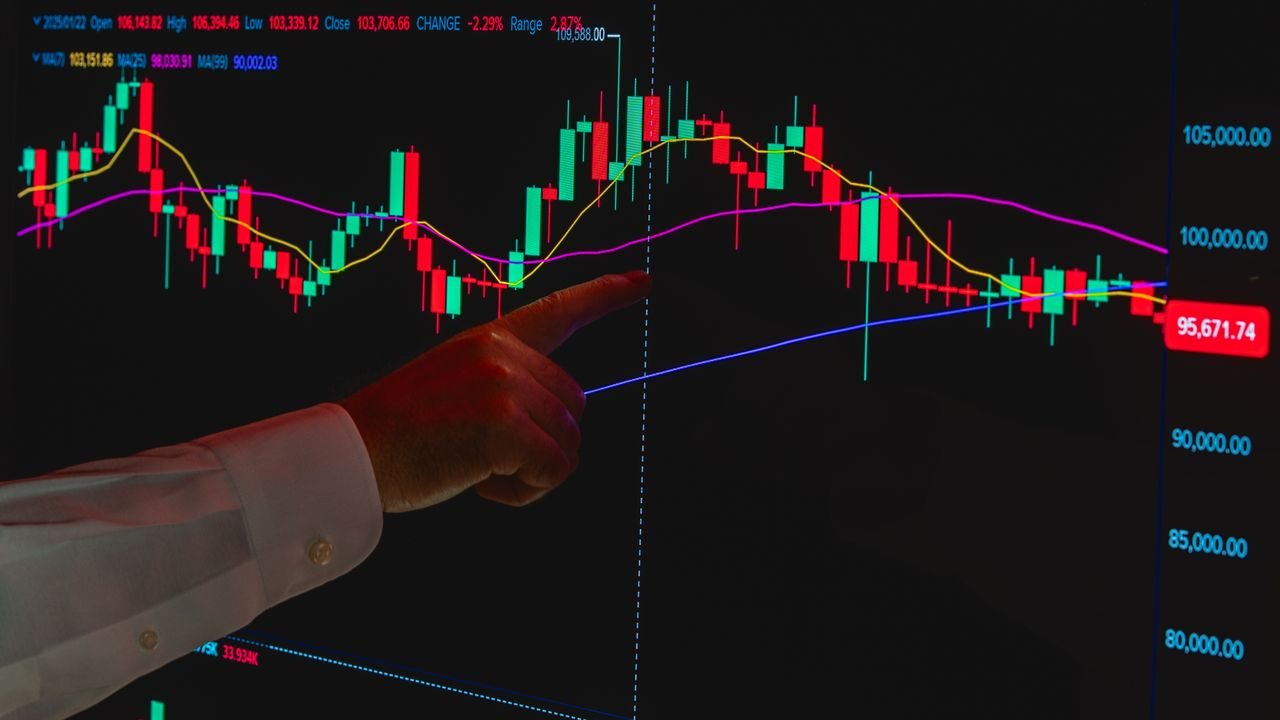

The four main types of trading styles are scalping, day trading, swing trading and position trading. They differ mainly in how long you hold a trade, and that decides your chart timeframe, how much screen time you need, how much the spread costs you and how big your stops are.
Quick answer: which trading style is best?
No style is best for everyone. Scalping holds trades for minutes, day trading closes everything before the session ends, swing trading holds for days and position trading for weeks or months. With a UK day job, swing or position trading usually fits best, because analysis and orders can be done outside working hours.
The four types of trading styles at a glance
A trading style is about timeframe, not method. You can use price action, supply and demand or indicators with any of the four; what changes is how long you stay in the trade and how often you have to decide.
| Style | Charts and holding time | Time needed | Fit with a UK day job |
|---|---|---|---|
| Scalping | 1 to 5-minute charts; seconds to minutes | Several focused hours | Poor: needs live screen time |
| Day trading | 5-minute to 1-hour charts; closed the same day | 2 to 4 hours in a session | Possible only if free in the US session |
| Swing trading | 4-hour and daily charts; days to a few weeks | 30 to 60 minutes a day | Good: analysis in the evening |
| Position trading | Daily and weekly charts; weeks to months | A few hours a week | Good: reviews at the weekend |
Scalping
Scalpers aim for many small moves, often a handful of points, and are in and out within minutes. It demands total concentration, fast execution and very low costs, because every single trade pays the spread. Our guide to the scalping trading strategy works through the real costs.
Stops are tight, so price only needs a small wiggle to hit them. The psychological load is the highest of the four: dozens of decisions a session, each with very little time to think.

Day trading
Day traders open and close positions within the same session, so nothing is held overnight. In the UK that usually means the London morning or the US afternoon, with the period after the US open at 14:30 UK time among the busiest for indices and the dollar. Our guide to day trading for beginners sets out a first routine.
The US regulator is blunt about the demands. The SEC’s investor guide Day Trading: Your Dollars at Risk calls day trading an extremely stressful and expensive full-time job, and warns that most individual investors lack the wealth, the time or the temperament for its losses. Our experience of teaching beginners matches that: it is the style people most want to try and the one least suited to a 9 to 5.

Swing trading
Swing traders aim to catch a single move, or swing, between support and resistance or between supply and demand zones on a daily chart, holding for days or a couple of weeks. Analysis happens on the 4-hour and daily charts, so it can be done in the evening and protected by orders during the day. Our guide to swing trading for beginners sets out a first weekly routine.
The trade-offs are overnight and weekend gaps, where price opens beyond your stop, and overnight funding charges on spread bets and CFDs. These are leveraged products, so losses can exceed what you expected, and the position size has to reflect the wider stop.
The psychological load is lower in volume but different in kind. You must sit through pullbacks without fiddling with the trade.

Position trading
Position traders follow the bigger trend on daily and weekly charts and hold for weeks or months. It sits close to investing but still uses defined entries, stops and exits, and it works in both directions, as our guide to going long and short in forex markets shows. Our position trading strategy guide sets out the rules in detail.
Time commitment is the lowest, often a weekend review. The demands are patience, tolerance for large open swings and awareness of funding costs, which add up on leveraged positions held for months. Fundamentals matter more here, such as what moves the US dollar over a quarter.

Scalping vs day trading vs swing trading: costs, stops and pressure
| Style | Spread impact | Typical stop | Psychological load |
|---|---|---|---|
| Scalping | Very high share of each target | A few points | Very high: constant decisions |
| Day trading | High | Tight, beyond intraday structure | High: session-long focus |
| Swing trading | Low relative to target | Wider, beyond daily structure | Moderate: sitting through pullbacks |
| Position trading | Very low; funding costs matter more | Widest, beyond weekly structure | Low day to day, high patience |
Example: suppose a market has a 1-point spread. A scalper targeting 5 points gives up 20% of every winning trade before it starts, while a swing trader targeting 100 points gives up 1%. Over a hundred trades a month, that difference can decide whether a scalping plan is workable at all.
Stop size changes your position size, not your risk. Example: on a £5,000 account risking 1% (£50), a 10-point stop allows £5 per point, while a 100-point swing stop allows 50p per point. The £ at risk is identical, and our guide to calculating position size for a spread bet shows the steps.

Which trading style is best for you?
Start with your diary, not with the style that looks most exciting. Then work through these steps:
- Count the hours you can watch markets without interruption on a normal weekday.
- Rule out any style that needs more time than that.
- Check your account’s spreads against the targets each remaining style needs.
- Pick the slowest style that still holds your interest, and test it on demo for at least 20 trades.
If you are unsure about the personal side, such as patience or how you handle losses, our self-assessment matching your trading personality to a method helps. Top-down chart analysis works with any style: the higher timeframe sets the direction and the lower one times the entry.
Common mistakes
- Choosing scalping because it looks fast, without checking what the spread does to tiny targets.
- Day trading at work on a phone, half watching the chart between tasks.
- Swing trading with a day trader’s stop, so normal daily noise keeps stopping you out.
- Holding leveraged position trades for months without counting the funding costs.
- Entering on a 5-minute signal, then turning it into a swing trade when it goes wrong.
That last one is a stop-loss problem in disguise. Our article on where to place a stop loss in price action trading explains why the stop belongs to the timeframe you entered on.
Frequently asked questions
What is the difference between scalping, day trading and swing trading?
The holding period. Scalpers hold for seconds to minutes, day traders close everything by the end of the session, and swing traders hold for days to a couple of weeks.
Which trading style is best for beginners?
Many beginners find swing trading easier to learn, because there is time to think between decisions and costs take a smaller share of each target. It still carries the risks of leverage and overnight gaps, so practise on demo first.
Can I day trade with a full-time job in the UK?
Only if your free hours overlap an active session, such as the US afternoon. For most people working a 9 to 5, swing or position trading is more realistic.
Can you combine trading styles?
Yes, but keep each trade in one style from entry to exit. Using a higher timeframe for direction and a lower one for timing is top-down analysis, not mixing styles.
Next steps
Once you have a style in mind, build the method behind it. Our guide to price action trading applies across all four timeframes, and deciding how much to risk per trade keeps the numbers consistent whichever style you choose.
For a structured path, the free basics section of The Two Traders course covers the foundations before you commit to a timeframe.
This article is for education only and is not financial advice. Trading leveraged products such as CFDs and spread bets carries a high risk of losing money.