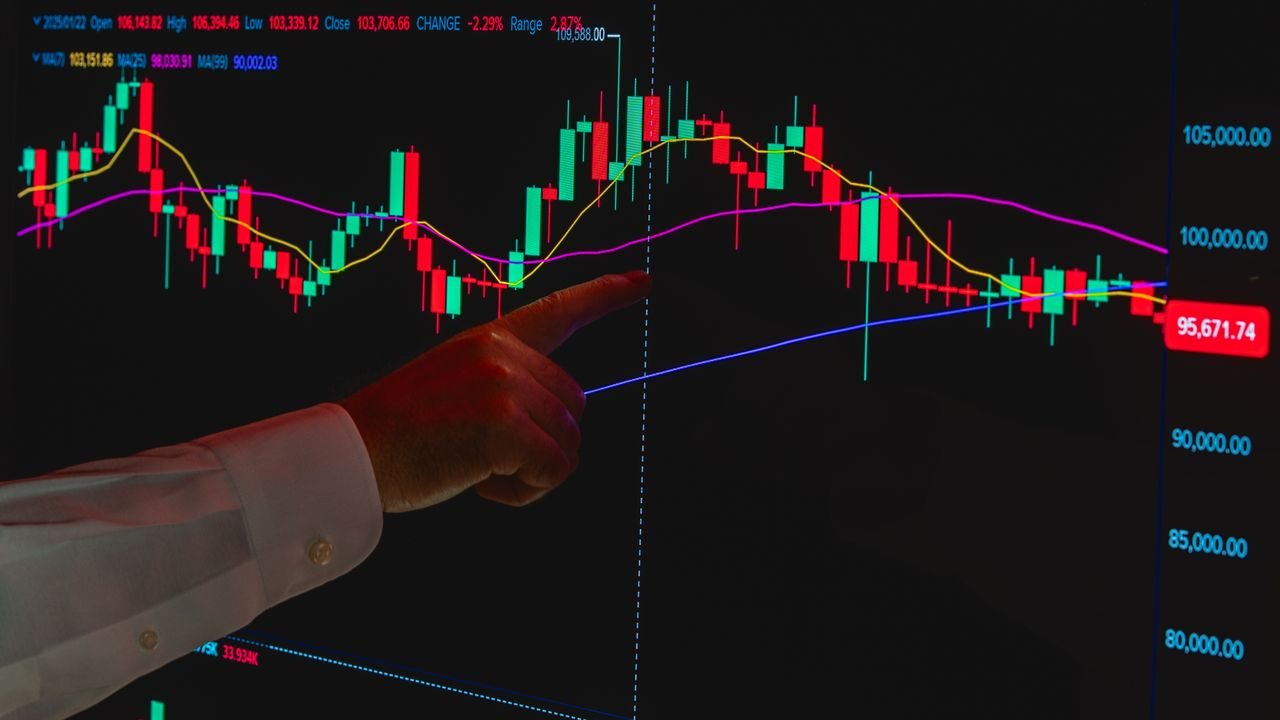

The three characteristics of losing traders we see most often are poor risk management, not controlling emotions, and inconsistency. They are habits, which means they can be spotted and changed.
Quick answer: what are the characteristics of losing traders?
Losing traders usually risk too much per trade, let fear and hope decide their entries and exits, and apply their plan and position size inconsistently. Even a sound strategy fails under these habits. The fix is a written plan, a small fixed risk on every trade, and a journal that shows whether you followed both.
The 3 characteristics of losing traders: our September 2017 post
We first published this post in September 2017. The original words are kept below, with one account-balance claim and an old link prompt removed.
Being a profitable trader is an achievement so many aspire for and yet so few are able to realise. Even with a profitable strategy, a few bad habits can destroy any chances of success. When I first started I made every mistake in the book, which I am very open about when I discuss my story . What separates me from most others is that I learnt from my mistakes and persevered through.
Here I discuss what I believe are the 3 key hurdles to avoid, not only in trading, but in life.
1. Poor risk management
Everyone has their own risk tolerances – some people love skydiving, others prefer their feet firmly on the ground, or if you’re like me, you’re somewhere in-between… (although probably nearer the ground)
Wherever you sit on the scale, to be a successful trader you must understand that managing risk is the most crucial element to trading. No matter how good your system is, if your position sizing is too big then you will eventually blow your account and this is where so many new traders go wrong.
There is a horrible catch-22 scenario when you first start trading, where you aren’t confident enough to put a large sum of money in to your account yet (And rightly so), but also its hard to think about money management when you have a tiny $500 account. If I said never risk more than 2-3% of your account on a trade that’s only $10-$15 – and you might feel like you’re going nowhere when you when make profit.
Nonetheless, I can tell you, it is possible. Focus on trading well, not making money. If you blow your account, you will remain a loser, so manage your risk.
2. Not controlling your emotions
We’ve all been there – whether it is through trading or another aspect of life – sometimes you allow your emotions to cloud your judgement. Being a good trader requires the highest level of discipline. You can’t release your road-raging alter-ego every time you get stopped out early, or the market moves against you.
And similarly, you can’t let hope dictate when you enter or exit your positions. I see so many people who ‘hope’ the next trade will go their way, or they ‘hope’ that the market will stop going against them.
Do you wonder why algorithms make good traders? And why so many hedge funds trade rule based strategies? Emotions are the enemy of good traders .
The solution to this is very simple – have a plan. Have a plan for entry, have a plan for exits, and know what your risk is. If you know what you’re letting yourself in for, it takes away any surprised.
When you get stopped out, you’ll know that was the risk. When the market goes your way, you’ll have no reason you get greedy and close out prematurely. A very basic solution, to a very complex problem.

3. Inconsistency
Inconsistency comes in many forms, all of which are a cause for concern. The main two are inconsistency in applying a plan, and inconsistency in position sizing. I mentioned before that a plan is the solution to overcoming your emotions and that your risk needs to be managed with small position sizing. Well, that only works if you do it consistently .
If you have a plan, but then decide ‘Oh, I’ll just extend my stop loss and let this run a little longer’, or ‘oh, well this position is a SURE THING, I’ll put half my account on it’, then you are back to square one.
Why losing habits are so common
Daniel Kahneman’s work, recognised in the 2002 Nobel Prize in Economic Sciences, found that people judge outcomes as gains or losses from a reference point, and that most are more averse to losses than partial to gains of the same size. In trading, that shows up as holding a losing trade in hope of getting back to breakeven, and banking a small winner before it can disappear.
A plan written before the trade is the counterweight to that “hope”. Our pillar guide to the five psychological hurdles traders face goes further into each one.

Losing habits vs winning habits: how to fix each one
Each losing habit has a winning counterpart; our companion post on the traits winning traders must develop covers the positive side in depth.
| Losing habit | Winning habit | Practical fix |
|---|---|---|
| Oversized positions | Small, fixed risk | Set a % risk rule before trading |
| Hoping a loser recovers | Accepting the stop | Place the stop with the entry |
| Changing rules mid-trade | Same rules every time | Check trades against the plan weekly |
| Bigger size on a “sure thing” | Same size on every setup | Calculate size from the stop |
A simple routine to break the habits
- Write the plan. Entries, stops and exits on paper; our guide on how to create a trading plan with a fill-in template gives you a structure.
- Fix the risk. Choose one small percentage per trade and size every position from it, using how to calculate position size from your stop.
- Set the stop before you enter. See where to place a stop loss with price action, and never widen it.
- Review weekly. Mark each trade “followed plan” or “broke plan”; a weekly review of your trades shows which habit costs you most.

Worked example: one “sure thing” against nine good trades
Example: a hypothetical trader has a £2,000 account and a rule of 1% risk per trade, which is £20. Their winners average twice the risk, so £40.
Over nine trades they win five and lose four: +£200 and −£80, a net gain of £120. Then a setup looks like a “sure thing”, and they risk a quarter of the account, £500, on it.

If that trade hits its stop, the account goes from £2,120 to £1,620. One inconsistent trade has wiped out the nine disciplined ones and £380 more. With leveraged CFDs and spread bets, a stop widened mid-trade can make it worse still.
Common mistakes when trying to fix bad habits
- Changing the strategy instead of the behaviour. Check rule-following first.
- Relying on willpower alone. Pre-set stops and a written plan do the work when emotions run high; our routine for how to stop emotional trading day to day helps.
Frequently asked questions
Why do most traders lose money?
Most losses come from behaviour rather than market knowledge: positions that are too large, stops moved or ignored, and rules applied only some of the time.
Why do I hold losing trades and close winners early?
Because losses feel worse than gains of the same size, which pushes people to avoid taking a loss and to lock in small gains. Setting the stop and target before entering removes that decision from the moment.
How much should a beginner risk per trade?
The original post suggested no more than 2-3%. Many traders use 1% or less while they learn, so a losing run does not do lasting damage; our guide on how much to risk per trade explains the trade-offs.
Next steps
Start with whichever habit your weekly review shows costs you most. For a structured method with rules for entries, exits and risk, the basics section of our price action trading course is free to start.
This article is for education only and is not financial advice. Trading leveraged products such as CFDs and spread bets carries a high risk of losing money.