
Interest rates and forex are tightly linked: a currency’s value depends heavily on what its central bank is expected to do with interest rates. Higher expected rates tend to attract money and support a currency; lower expected rates tend to weigh on it. The key word is expected, because markets move on surprises, not on the headline decision alone.
Quick answer: how do interest rates affect forex?
Interest rates set the return on holding a currency. When a central bank is expected to raise rates, or cut more slowly than others, investors often buy that currency; expected cuts tend to weaken it. Because a pair is two currencies, the gap between the two banks’ rate paths matters more than either rate alone.
Why interest rates move currencies
Money flows towards a better return. If sterling deposits and UK government bonds pay more than similar dollar assets, some investors will swap dollars for pounds to earn the difference. That demand supports the pound against the dollar.
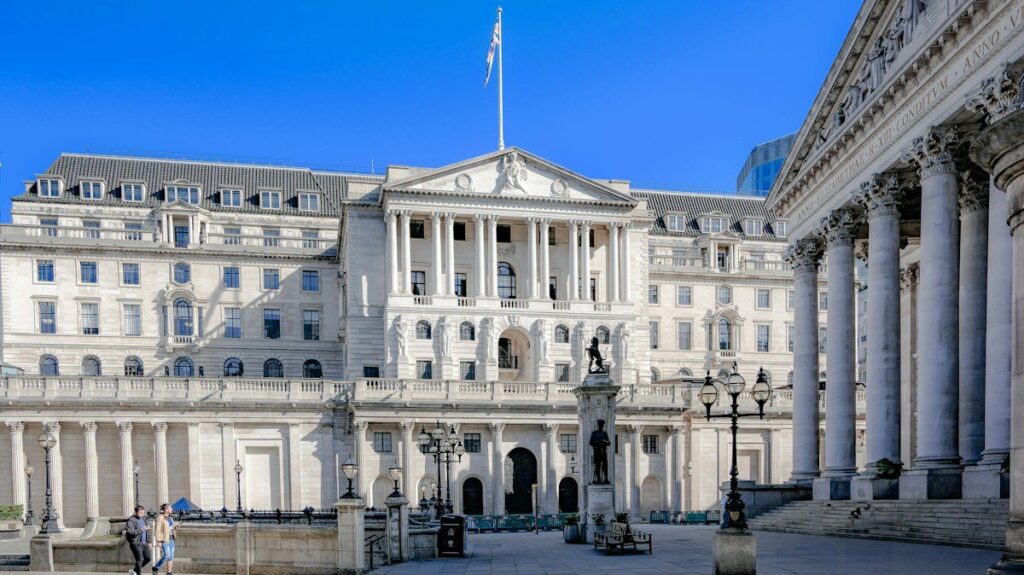
The Bank of England sets Bank Rate to keep inflation at its 2% target. As of 15 October 2026, the Bank’s official Bank Rate page shows Bank Rate at 3.75%, held at the 17 September 2026 decision. Changes to Bank Rate pass through to the rates banks offer savers and borrowers, which is why the currency market watches every decision.
The interest rate differential
Every forex pair is a comparison of two currencies, so traders look at the interest rate differential: the gap between the two countries’ rates. GBP/USD reflects the outlook for the Bank of England and the US Federal Reserve together. A rate rise in the UK can be outweighed if the Fed is expected to raise rates faster.
This is also the basis of the carry trade and its interest differential risks, where traders hold a higher-yielding currency against a lower-yielding one. For the US side of the comparison, see our guide to what moves the US dollar.
Central bank decisions and market expectations
By the time a decision is announced, the market has usually spent weeks pricing it in. If nearly everyone expects a hold and the bank holds, the headline itself may barely move the pound. What moves price is the difference between what happened and what was expected.

For Bank of England decisions, three parts matter:
- The decision: raise, cut or hold Bank Rate.
- The vote split: how the nine members of the Monetary Policy Committee voted. A hold with several votes for a cut can weaken the pound more than an expected cut.
- The guidance: what the statement and press conference suggest about future meetings. Traders call a tone that leans towards higher rates hawkish, and one that leans towards cuts dovish.
Why a rate rise can still sink the pound
It happens often enough to confuse beginners. If traders bought pounds for weeks ahead of an expected rise, the rise is already in the price. If the bank then hints that this is the last rise for a while, buyers take profits and the pound can fall on a hawkish headline. One way to see how speculators are positioned is the Commitment of Traders report.
| What happens | Typical first reaction | Why |
|---|---|---|
| Decision matches expectations | Small move, then guidance drives price | Already priced in |
| Hawkish surprise | Currency tends to strengthen | Higher expected returns |
| Dovish surprise | Currency tends to weaken | Lower expected returns |
| Expected rise, dovish guidance | Currency can fall | Fewer rises ahead |
| Other bank surprises | Pair moves without UK news | The differential changed |
These are tendencies, not rules. Inflation data, risk appetite and politics can all override the rate story for days or weeks.
Bank of England rates and GBP: what to watch
Decisions are scheduled well in advance. The Bank publishes its Monetary Policy Committee dates for 2026 and 2027, and at the time of writing the next one is due on 5 November 2026. We mark every date in our economic calendar for trading at the start of the week.
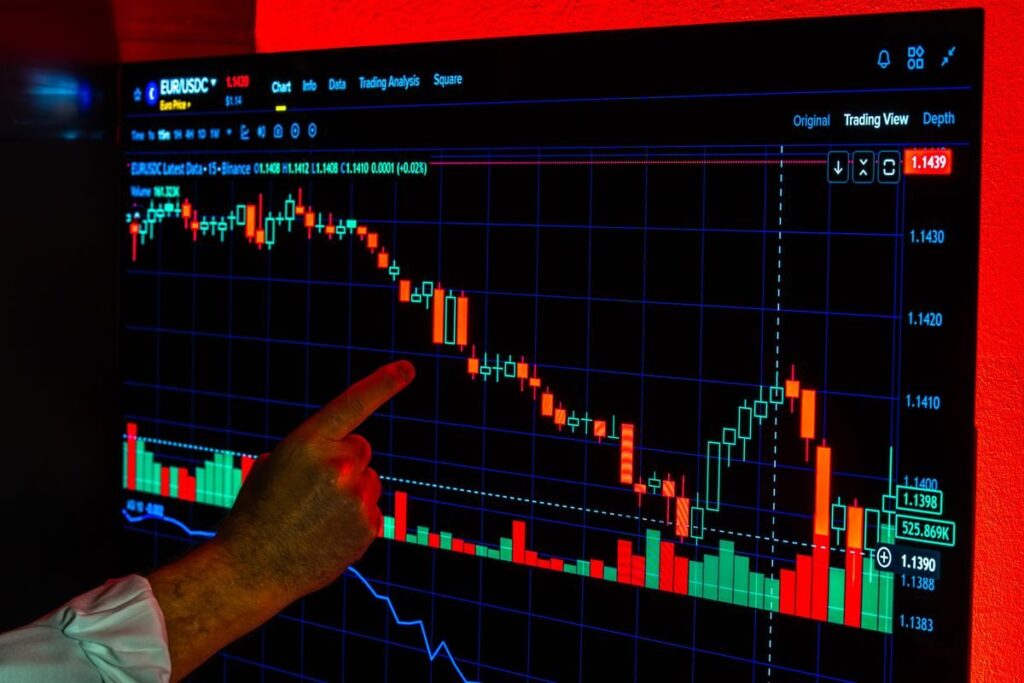
Between meetings, the pound responds to anything that changes rate expectations: inflation figures, wage growth, jobs data and speeches by committee members. A higher than expected inflation reading can lift sterling because traders expect rates to stay higher for longer.
Which pairs react
GBP/USD, EUR/GBP and GBP/JPY all carry a pound leg, so a Bank of England surprise moves them together. Holding several at once on decision day stacks one exposure, as we explain in our guide to correlation in forex trading.
How we handle a rate decision day
We do not try to guess the decision. In our experience the first minutes after a release are the hardest to trade: spreads widen, price can jump past stops and fills can be worse than the price on screen. Our guide to slippage and why fills differ from your price explains the mechanics.
- Check the calendar for decisions on both currencies in the pair.
- Decide before the day whether open trades stay open, shrink or close.
- Avoid new entries in the run-up and the first minutes after the release.
- Let price settle, then judge the reaction at your levels with your usual rules.
A central bank release is one of the conditions in our list of when not to trade and stay flat, and for many beginners sitting out is the sensible choice.

Worked example: sizing around a rate decision
This example is hypothetical. On a £5,000 account we normally risk 1%, or £50, per trade. We see a long GBP/USD setup with a 40-pip stop, which works out at £1.25 per pip using our guide to calculating position size from your stop.
The Bank of England decides the next day. If a dovish surprise gaps price 15 pips through our stop, the loss becomes 55 pips, or £68.75: more than a third above the planned risk. Spread bets and CFDs are leveraged, so a gap like this can cost more than the plan allowed.
Our choices are to skip the entry, halve the size to £0.62 per pip, or wait until after the decision and reassess. The setup is not worth risking more than our rules allow.
Common mistakes with interest rates and forex

- Trading the headline: reacting to “rates up” without checking expectations, the vote split and the guidance.
- Ignoring the other currency: a pair moves on both central banks, not one.
- Entering at the release: wide spreads and slippage can turn a small planned loss into a large one.
- Using old rate figures: always check the current rate on the central bank’s own website.
- Stacking pound trades: several GBP pairs on decision day is one bet taken several times.
Frequently asked questions
Does a rate rise always strengthen a currency?
No. If the rise was expected, it is often already in the price, and cautious guidance about future rises can push the currency lower. The surprise relative to expectations matters more than the decision.
How often does the Bank of England set Bank Rate?
The Monetary Policy Committee meets eight times a year on dates published in advance on the Bank of England’s website. Check that schedule rather than relying on a third-party list.
What does priced in mean in forex?
It means traders have already bought or sold based on what they expect, so the current price reflects that view. Only news that differs from the expectation is likely to cause a large move.
Should beginners trade central bank announcements?
We suggest not. Spreads widen and price can gap, so the risk is harder to control. Waiting for the market to settle and then applying your usual rules is calmer and easier to size.
Next steps
If you are new to currencies, start with our guide to how to trade forex for beginners in the UK, then plan your sessions with the best time to trade forex in the UK.
Reading the market around news, and knowing when to stand aside, is part of our price action trading course, and the basics section is free to start.
This article is for education only and is not financial advice. Trading leveraged products such as CFDs and spread bets carries a high risk of losing money.


